Friday, October 14, 2022

Salish Sea News Week in Review October 14 2022


Aloha Winnie-the-Pooh Friday!

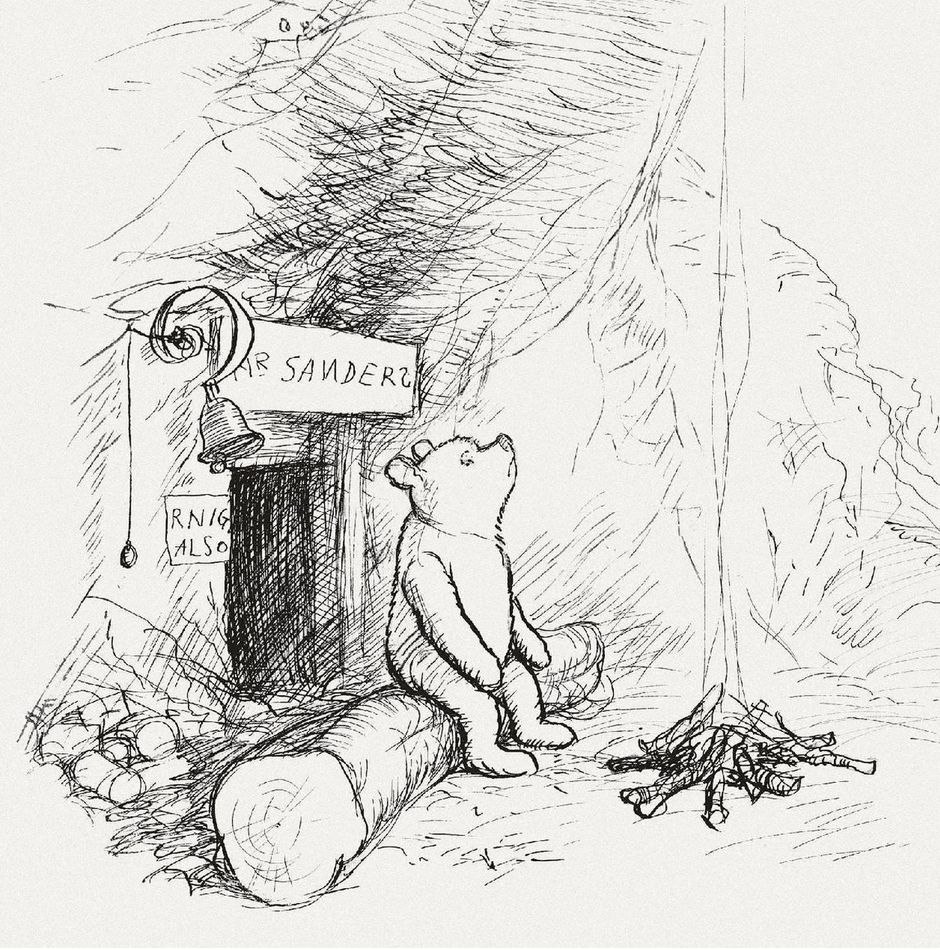
On this day in 1926 Winnie-the-Pooh made his literary debut. The popular children’s book character was created by British author A.A. Milne and first appeared in a collection of short stories called Winnie-the-Pooh. Winnie, a teddy bear, lives in Ashdown Forest, Sussex, England. The book followed his adventures in the forest with his friends Piglet, Owl, Rabbit, and Eeyore.


Why the country’s largest shellfish farm is struggling to hire and retain workers
It used to be that [Taylor Shellfish] could fill a job opening within a few weeks. Now, amid a remarkably tight labor market, that process can take four months.

Historic drought behind B.C. wildfires, salmon die off could continue, experts say
Thousands of dead fish, a prolonged wildfire season and intense water shortages leading to ice rink closures are all symptoms of record-setting drought in parts of British Columbia. The Lower Mainland, Sunshine Coast and West Vancouver Island areas are experiencing Level 5 drought conditions — the most severe in the province's classification scale.

Conservation concerns cancel Alaska’s Bering snow, king crab seasons
Alaska officials have canceled the fall Bristol Bay red king crab harvest, and in a first-ever move, also scuttled the winter harvest of smaller snow crab. The move is a double whammy to a fleet from Alaska, Washington and Oregon pursuing Bering Sea crab in harvests that as recently as 2016 grossed $280 million. 

West Coast gray whale population continues to decline but scientists remain cautiously optimistic
U.S. researchers say the number of gray whales off western North America has continued to fall over the last two years, a decline that resembles previous population swings over the past several decades. 

Seattle’s record-setting warm and dry weather is both random and a dress rehearsal, experts say
Seattle’s identity has been synonymous with drizzle, moss and the angsty grunge music and compulsive coffee drinking that’s fueled by its notoriously damp, gray weather. But this year’s summer and start of fall are threatening to wring those traits from the city’s long-held character.

Puget Sound salmon habitat restored with tribes leading the way
Reconnecting estuaries — the place where fresh and salt water meet — is an effort largely led by Washington’s tribes and backed by local and state leaders... At 353 acres, the Port of Everett’s Blue Heron Slough restoration project is among the largest along the Puget Sound.

We need to talk about B.C.’s drought
In the depths of this record-breaking B.C. drought, pretty much everyone I know is tormented by two opposing sentiments: 1) Overwhelming joy at the endless summer we’re having and 2) A growing sense of anxiety about how nearly three months with no rain in much of B.C. is impacting, well, all other living things. 

Groups working to remove thousands of tires from Puget Sound
The Washington Scuba Alliance (WSA) has teamed up with Coastal Sensing and Survey to locate 500,000 tires that were put underwater in Puget Sounds and Hood Canal in the 70s to create fish habitat. The organization said a recent study revealed the decomposing tires are poisoning sea life including Coho salmon.


These news clips are a selection of weekday clips collected in Salish Sea News and Weather which is compiled as a community service by Mike Sato. To subscribe at no cost to the weekday news clips, send your name and email to mikesato772 at gmail.com. Your email information is never shared and you can unsubscribe at any time.

Salish Sea News: Communicate, Educate, Advocate

Follow @savepugetsound

Salish Sea Communications: Truth Well Told

Friday, October 7, 2022

Salish Sea News Week in Review October 7 2022


Aloha Smile Friday!
World Smile Day is dedicated to the smiley face, which was created by Harvey Ball in 1963. He also came up with the idea for World Smile Day, which was first held in 1999, two years before his death. Following his death, the Harvey Ball World Smile Foundation was created, with the slogan "improving the world, one smile at a time". The foundation's goal in raising awareness for World Smile Day is to "encourage smiles and acts of kindness around the world."

U.S. Supreme Court takes on Clean Water Act in Idaho couple’s case
A challenge to The Clean Water Act comes in the form of Sackett v. Environmental Protection Agency, a case that will be heard by the Supreme Court on Monday, the first day of the court’s new term.

Final federal report on saving salmon calls for removing Snake River dams
The final draft of a federal report on rebuilding salmon and steelhead populations in the Pacific Northwest includes a call for removing the four Lower Snake River dams, among other actions.

Logging industry targeted B.C. old-growth forests for more than a century, SFU study finds
Ken Lertzman's paper shows between 1860 and 2016, 87 per cent of logging took place in old-growth forests.

B.C. government in court Tuesday to face inadequate climate plan allegations
The lawsuit — filed by Ecojustice on behalf of Sierra Club B.C. — alleges the government’s plan for the 2025, 2040 and 2050 climate targets is inadequate, and leaves out details on how it plans to cut carbon pollution from the oil and gas sector.

The complicated truth about pipelines crossing Wet’suwet’en territory
Alberta-based energy giant TC Energy frequently points to its agreements with 20 First Nations along the route of the Coastal GasLink pipeline. This is true, but look a little deeper and it's a lot more complex.

Low water levels caused by drought preventing salmon from spawning
Persistent dry conditions have left salmon populations struggling with low water levels and higher temperatures in streams where they typically spawn.

Report: Aging orca taken from Puget Sound fighting chronic infection at Miami Seaquarium
Ongoing medical issues may further hinder efforts to return an orca that was captured and sold to an aquarium in Florida, back home to Washington state.

Eleanor Stopps Award presented
Environmental advocate Lorna Smith was recognized for decades of conservation work Wednesday when she was given the 2022 Eleanor Stopps Environmental Leadership Award during a Port Townsend Marine Science Center ceremony at Fort Worden.

B.C. premier signs new climate agreement with U.S. governors
B.C.'s premier and governors from the western United States have signed a memorandum agreement on climate approaches for the Pacific region.

Buttigieg wades into Northwest salmon transportation
Transportation Secretary Pete Buttigieg paid a visit Thursday afternoon to Carey Creek, a tributary of Issaquah Creek that is an ancient migration route for now-threatened salmon. Standing under smoky skies with Democratic politicians, he announced that the first $196 million of a $1 billion fish-passage fund.

These news clips are a selection of weekday clips collected in Salish Sea News and Weather which is compiled as a community service by Mike Sato. To subscribe at no cost to the weekday news clips, send your name and email to mikesato772 at gmail.com. Your email information is never shared and you can unsubscribe at any time.

Salish Sea News: Communicate, Educate, Advocate

Follow @savepugetsound

Salish Sea Communications: Truth Well Told

Friday, September 30, 2022

Salish Sea News Week in Review September 30 2022


Aloha Koala Friday!

The koala or, inaccurately, koala bear is an arboreal herbivorous marsupial native to Australia. It is the only extant representative of the family Phascolarctidae and its closest living relatives are the wombats.
(Wikipedia)

Old volcanoes, big energy
Volcanoes beneath mountains near Whistler, B.C., hold a big green energy promise. But can scientists and industry deliver?

After 2-year pandemic pause, Seattle-BC train service returns
Amtrak service between Seattle and Vancouver, B.C., is back up and running as of Monday, Sept. 26...Just one daily round trip will be offered, at first, while Amtrak gets its staffing and equipment levels back up to par.

BC’s Big Trees Protection Is Toothless. Government Knew It
Officials in British Columbia’s Forests Ministry understood that a regulation introduced in 2020 to protect big trees on public lands would have little impact. They designed it that way.

Biden administration launches environmental justice office
The Office of Environmental Justice and External Civil Rights — comprised of more than 200 current staff members in 10 U.S. regions — will merge three existing EPA programs to oversee a portion of Democrats’ $60 billion investment in environmental justice initiatives created by the Inflation Reduction Act and distribute $3 billion in block grants to underserved communities burdened by pollution.

The racism, and resilience, behind today’s Pacific Northwest salmon crisis
There’s no one in this region whose life isn’t touched by the fish, whether they think about it or not.

Killer whale census shows another down year, with three deaths and two births
Three deaths and two births. Over the past year, the endangered Southern Resident killer whale population has declined by a total of one, according to the annual census report submitted yesterday by the Center for Whale Research. Now the number of whales in all three pods stands at 73, down from 74 last year and declining from 98 animals the past 25 years.

From pavement to gardens: how urban green spaces can alleviate flood problems
By 2050, Vancouver is expected to see more rain during the fall, winter, and spring months due to human-caused climate change. Without new measures to manage heavy rainstorms, the city could see more flooding. A new 'rainway' in Vancouver aims to combat climate change and prevent flooding in the city, while also supporting biodiversity.

River Deltas Are Running Out of Land
Millions of people live on river deltas, occupying land that exists in the delicate balance between a river’s push and the ocean’s pull. Deltas are inherently transient, but according to a new study, many may be even more precarious than once thought, with unexpectedly high levels of land loss threatening to submerge these low-lying landscapes. 

Study raises concerns about contaminants in edible seaweeds
A new study just published by researchers at Western Washington University (WWU) reports concentrations of up to 162 chemical contaminants in three species of edible seaweeds gathered in the Salish Sea. 

State Board awards nearly $76 Million in grants to fund salmon recovery projects
On Sept. 26, the Washington State Salmon Recovery Funding Board announced the award of nearly $76 million in grants across the state to help ensure the survival of salmon in Washington. The grants that were funded went to 138 projects in 30 of the state’s 39 counties.


These news clips are a selection of weekday clips collected in Salish Sea News and Weather which is compiled as a community service by Mike Sato. To subscribe at no cost to the weekday news clips, send your name and email to mikesato772 at gmail.com. Your email information is never shared and you can unsubscribe at any time.

Salish Sea News: Communicate, Educate, Advocate

Follow @savepugetsound

Salish Sea Communications: Truth Well Told

Friday, September 23, 2022

Salish Sea News Week in Review September 23 2022


Aloha Bisexuality Friday!
Bisexuality Day came about in response to prejudice and marginalization that bisexuals experienced from both straight people and from those within the LGBT community. It was first observed in 1999, after being thought up by three bisexual rights activists: Wendy Curry, Michael Page, and Gigi Raven Wilbur.

Inside a 50-year journey to reopen the ‘lungs’ of the Squamish River  
A company built a spit that blocked salmon from accessing crucial habitat — then it left. Decades later, the Squamish Nation, local environmentalists and the federal government have worked together to finally break open the barrier and reconnect a fractured estuary.

Indigenous leaders hope to restore the culinary and cultural bounty of ancient B.C. sea gardens
For years, academics wondered about the origins of the long string of rocks piled along the tide line. The answer came when they spoke to local First Nations, who said the rocks were sea gardens created by their ancestors as cultivation sites thousands of years ago.

The Once and Future River
The Duwamish has been a vital waterway for Indigenous peoples for generations. Now it’s largely invisible, drastically reshaped, and among the most polluted rivers in the nation. Can it be saved?

First public global database of fossil fuels launches
A first-of-its-kind database for tracking the world’s fossil fuel production, reserves and emissions includes data from over 50,000 oil, gas and coal fields in 89 countries, covering 75% of global reserves, production and emissions.

Coastal GasLink warned more than 50 times over environmental violations during pipeline construction
Coastal GasLink has now been warned more than 50 times about environmental violations during construction of its natural gas pipeline across northern British Columbia, according to the province.

After decades of dwindling runs, sockeye salmon return to Yukon fishing village in droves
It's been more than 20 years since Champagne and Aishihik elder Chuck Hume has seen anything close to the number of sockeye salmon that have shown up to spawn at the Yukon fishing village of Klukshu this fall. Numbers are almost double the escapement goal so far, but it's not yet clear why the fish are back.

The Forest Service is experimenting with relocating tree species to save them from climate change
‘Assisted migration’ has come to the Pacific Northwest, but experts don’t agree if it’s a good thing or a radical response to a warming world.

Mayor Harrell signs $6.5 million Green New Deal to reduce impact of climate change
Mayor Bruce Harrell signed the Green New Deal legislation into law Thursday morning, which includes a series of projects that aim to reduce greenhouse gas emissions in Seattle and build the communities' resilience against the effects of climate change.

Pandemic Poaching Sets Rockfish Conservation Effort Back Years
Illegal fishing in rockfish conservation areas around Galiano Island, British Columbia, spiked dramatically in 2020 and 2021.

These news clips are a selection of weekday clips collected in Salish Sea News and Weather which is compiled as a community service by Mike Sato. To subscribe at no cost to the weekday news clips, send your name and email to mikesato772 at gmail.com. Your email information is never shared and you can unsubscribe at any time.

Salish Sea News: Communicate, Educate, Advocate

Follow @savepugetsound

Salish Sea Communications: Truth Well Told


Friday, September 16, 2022

Salish Sea News Week in Review September 16 2022


Aloha Guacamole Friday!
Guacamole was first made by the Aztecs, who lived in what is now central Mexico, between the 14th and 16th centuries. Appropriately, the day is celebrated on Mexican Independence Day. The name guacamole means "avocado sauce" in Nahuatl, the Aztec language, and many times it is simply called "guac" in the United States.

US officially changes names of places with racist term for Native women
The U.S. government has joined a ski resort and others that have quit using a racist term for a Native American woman by renaming hundreds of peaks, lakes, streams and other geographical features on federal lands in the West and elsewhere.

B.C. conservationists decry lack of action, transparency 2 years into forestry stewardship overhaul
Two years into a three-year process to defer the logging of some of B.C.'s grandest trees in its most ecologically diverse wilderness so that forestry stewardship could undergo a vast transformation, First Nations and conservationists are decrying a lack of progress and transparency.

Restoring salmon habitat could help B.C.’s flood problems
Decisions to restrict the mighty Fraser River through extensive diking have had dire consequences for fish. Now B.C. has an opportunity to 'build back better' — but will it?

B.C. still a long way from meeting greenhouse gas targets
The province set a legislated target of a 16 per cent reduction from 2007 levels by 2025. B.C. has only reduced a fraction of the greenhouse gas emissions needed to meet its 2025 targets, according to the updated inventory released by the province last week. 

Operator of Colstrip coal plant to buy out co-owner Puget Sound Energy, install some wind
The operator of Montana’s Colstrip coal-fired power plant said Monday it was buying out one of the site’s co-owners and plans to construct a wind farm nearby that would generate 600 megawatts of electricity. Talen Energy Supply would acquire Puget Sound Energy’s 25 percent share of Colstrip’s two remaining coal-fired units under the deal. The units combined generate about 1,480 megawatts of electricity.

Boardman smokestack demolition will mark the end of a coal-fired era in Oregon
A contractor is set to demolish the towering smokestack at Portland General Electric’s shuttered coal-fired power plant near Boardman at 10 a.m. Thursday, heralding the end of the era of coal-fired power generation in Oregon.

Billionaire No More: Patagonia Founder Gives Away the Company
Rather than selling the company or taking it public, Mr. Chouinard, his wife and two adult children have transferred their ownership of Patagonia, valued at about $3 billion, to a specially designed trust and a nonprofit organization. They were created to preserve the company’s independence and ensure that all of its profits — some $100 million a year — are used to combat climate change and protect undeveloped land around the globe.

EPA Must Act on Toxics, Court Orders
A federal court ordered the U.S. Environmental Protection Agency (EPA) on Aug. 30 to take the first step towards updating Washington’s water quality standards for 17 key toxic pollutants known to harm endangered salmon, steelhead, and the Southern Resident killer whales that depend upon them.

Lululemon founder Chip Wilson gifts $100M to help protect nature in B.C.
Lululemon Athletica Inc. founder and billionaire Chip Wilson is donating $100 million to the B.C. Parks Foundation to help protect and enhance the province's nature.


These news clips are a selection of weekday clips collected in Salish Sea News and Weather which is compiled as a community service by Mike Sato. To subscribe at no cost to the weekday news clips, send your name and email to mikesato772 at gmail.com. Your email information is never shared and you can unsubscribe at any time.

Salish Sea News: Communicate, Educate, Advocate

Follow @savepugetsound

Salish Sea Communications: Truth Well Told

Friday, September 9, 2022

Salish Sea News Week in Review September 9 2022


Aloha Teddy Bear Friday!

National Teddy Bear Day is dedicated to the stuffed bear that was named after the 26th President of the United States, Theodore Roosevelt. On a hunting expedition, Roosevelt refused to shoot an injured bear. After the incident was publicized in a Washington Post drawing, Rose and Morris Mitchom, store owners in New York City, saw the cartoon and were inspired to create the teddy bear, which they originally called "Teddy's bear." They eventually founded the Ideal Toy Company which produced the bears.

Group seeks endangered species protection for West Coast bull kelp
An environmental group is seeking Endangered Species Act protections for underwater forests of bull kelp along the West Coast. The Center for Biological Diversity on Thursday submitted a petition to the National Oceanic and Atmospheric Administration to grant endangered status to the long stalks of kelp that are critical to Oregon coastal ecosystems.

‘We’re Sued on Pretty Much Everything We Try’: Canada’s Climate Minister  
When Steven Guilbeault became Canada’s environment minister he was assigned a lengthy mandate letter which boils down to, more or less: fix climate change, please. In fact, his official title is Minister of Environment and Climate Change — a mantle he wears after being an environmental activist for 30 years before he transitioned to politics.

‘A beautiful lie’: BC Hydro says it will replace the wetlands Site C destroys, but experts say it’s impossible
This month, BC Hydro is set to drain and log Watson Slough to make way for the Site C dam in northwest B.C. Beavers will be trapped and euthanized and their dams will be destroyed to release the water from the wetlands. The slough, a collection of different types of wetlands stretching 20 hectares — roughly the size of 25 Canadian football fields — is a beloved nature area in the Peace River Valley renowned for birdwatching and visited by hundreds of schoolchildren over the years. It’s home to at-risk species like the yellow rail, a small marsh bird that hides among the grasses, and the stocky western toad. Elk, black bears, beavers, deer and muskrats also use the wetland along Highway 29 west of Fort St. John.

Green crabs have already invaded Washington's shorelines. Now they're heading to Alaska.
The first signs of the Alaskan invasion were discovered by an intern. In July, a young woman walking the shoreline of the Metlakatla Indian Community during an internship with the National Oceanic and Atmospheric Administration found a shell of a known menace in the U.S. — the European green crab...Within a month and half, more than 80 live green crabs had been trapped along the Metlakatla shoreline, Winter said, making the community ground zero in the fight against the species in Alaska, though it’s possible other areas of Alaska have been colonized already. 

Intalco aluminum smelter releasing high levels of sulfur dioxide
Despite curtailment, Ferndale’s Intalco aluminum smelter continues to exceed safe emission levels of sulfur dioxide, a respiratory risk, in the region. [T]he plant will need significant modification to produce “permanent and enforceable reductions to SO2 emissions” at the facility.

Rising seas could swallow millions of U.S. acres within decades
New research finds an estimated 25,000 properties in Louisiana could slip below tidal boundary lines by 2050. Florida, Texas and North Carolina also face profound economic risks.

The northern B.C. pipeline you’ve never heard of — Enbridge’s Westcoast Connector
First approved in 2014, the pipeline would ship up to 8.4 billion cubic feet of fracked gas every day. Now the company is seeking an extension until 2029 and applying to amend its route to avoid a Treaty 8 nation territory at the centre of a court ruling on the impacts of industry.

These news clips are a selection of weekday clips collected in Salish Sea News and Weather which is compiled as a community service by Mike Sato. To subscribe at no cost to the weekday news clips, send your name and email to mikesato772 at gmail.com. Your email information is never shared and you can unsubscribe at any time.

Salish Sea News: Communicate, Educate, Advocate

Follow @savepugetsound

Salish Sea Communications: Truth Well Told


Friday, September 2, 2022

Salish Sea News Week in Review September 2 2022


Aloha Coconut Friday!
Coconuts grow on the coconut palm tree and are a fruit from the drupe family. They grow in more than 80 countries and are an essential crop in the tropics. It takes a year for a coconut to ripen, and a tree may produce about 100 of them each season. Coconuts have antifungal and antiviral properties and are high in lauric acid, electrolytes, and antioxidants. The flesh, which is high in fat, can be dried and eaten fresh, or be used to make coconut milk or coconut oil. Coconut water can be found at the center of the coconut.

How a 32-year-old climate activist is shaking up the race to be B.C.’s next premier
In a litmus test for the political clout of the climate movement, Anjali Appadurai, who’s never held public office, is gunning for an upset over establishment favourite David Eby in the NDP leadership contest.

Camera station documents a Pacific marten in Olympic National Forest
A rare Pacific marten recorded by a motion-triggered wildlife camera is the first time the species has been recorded by a camera survey in Olympic National Forest.

In a warming climate, Bristol Bay sockeye return this summer to Alaska in another record run
...This year’s return of Bristol Bay sockeye smashed the previous high set only last year. Meanwhile in western Alaska, the Yukon River’s runs of king and, more recently, chum — both mainstays of Native fishermen — have imploded, shutting down harvests for the past two years.

New rules put Puget Sound's urban trees in private hands
Because the majority of the region's trees are in residential neighborhoods, responsibility for maintaining canopy coverage is shifting to homeowners.

Data centers, backbone of the digital economy, face water scarcity and climate risk
For years, companies that operate data centers have faced scrutiny for the huge amounts of electricity they use storing and moving digital information like emails and videos. Now, the U.S. public is beginning to take notice of the water many facilities require to keep from overheating.

Study raises questions about using ‘woody debris’ to restore streams
Efforts to improve salmon streams damaged by past logging and other human activities commonly include the addition of carefully placed logs, tree roots or “woody debris” to mimic this natural system.

If you like to watch: Close encounter with orcas delights Quadra Island visitor
Callum Macnab of Victoria was standing in the water but scrambled out when four orcas swam by within metres of him. (video) 

These news clips are a selection of weekday clips collected in Salish Sea News and Weather which is compiled as a community service by Mike Sato. To subscribe at no cost to the weekday news clips, send your name and email to mikesato772 at gmail.com. Your email information is never shared and you can unsubscribe at any time.

Salish Sea News: Communicate, Educate, Advocate

Follow @savepugetsound

Salish Sea Communications: Truth Well Told